How nature-based design can have extraordinary impact

In September 2025, Apple released their broadest ever software update that aligns design across all their platforms. At the heart of this update is Liquid Glass, a new expressive material that mirrors the fluidity of nature and dynamically reacts to its surroundings.
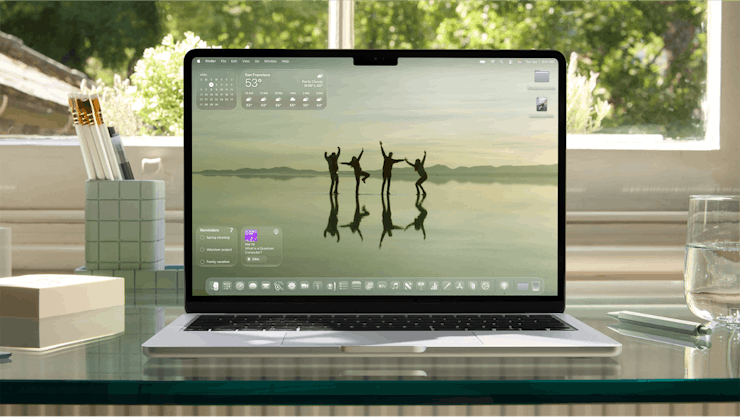
Since the announcement 3 months prior, it’s divided tech circles who’ve debated the merits of a true cross platform design and Apple’s intention with their software overhaul.
For what it’s worth, we love Liquid Glass, and its objective to make software experiences feel effortless, dynamic and joyful.
Yet, what’s been entirely overlooked by both commentators and possibly even Apple themselves, is the grounding of Liquid Glass in biophilic design.
If you’re new to the term, biophilic design is largely ubiquitous with the worlds of architecture and interior design. It relates to bringing elements of nature into the design of our built environments, by incorporating natural materials, textures, shapes, and patterns, to promote wellbeing. Its deeper purpose is to bring us closer to nature and reconnect us with it.
To us, Liquid Glass looks like the digital embodiment of biophilic design. Apple talk of design that adds “fluidity” and “vitality”, and feels “natural”, so much so it’s hard to imagine Liquid Glass wasn’t inspired by nature and our human interaction with it. The design itself feels akin to drops of rain running across a window - a familiar interaction between a human world living indoors, and the natural world outside.
If Liquid Glass is inspired by nature, then that too is an interesting subplot. Apple Park, opened in 2017, is one of the finest examples of biophilic architecture in the world. Imagined by Steve Jobs, Jonny Ive, and Norman Foster, it was designed to harness creativity and collaboration, and bring together Apple’s disjoined workforce. More recently, Tim Cook has spoken about how nature inspires both himself and many people at Apple.
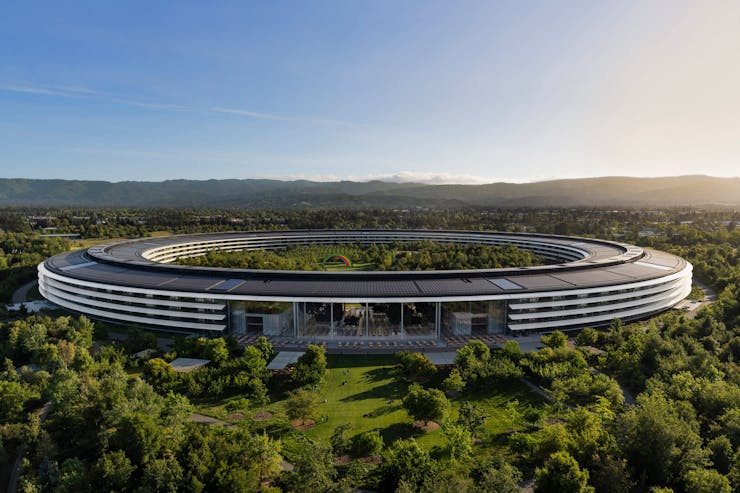
The design of Apple Park quite literally puts nature at its heart. In the centre of the vast circular building lies beautiful orchards, meadows and further green space. The structure itself boasts the world’s largest curved glass walls to provide natural light and views across a surrounding campus of 9000 trees. A natural ventilation system brings in constant fresh air. Interweaving pathways invite organic interaction and collaboration, but also wellness benefits walking from one area to another.
Whether or not the spark for Liquid Glass came within the boundaries of Apple Park or beyond, it has been crafted, shaped and imagined in the biophilic surrounds of Apple HQ.
But here’s the thing… Underpinning biophilic design is health. We’ve evolved in natural environments over millions of years to respond to its cues and clues. It directly shapes the way we think, feel and behave. In fact, natural environments are even shown to reshape neural pathways in our brain.
Biophilic design doesn’t need to remain confined to architecture and interior design. Bringing the same philosophy into the design of everyday experiences, and interweaving it back into our everyday lives, can help to improve health and wellbeing and bring us closer to the natural world.
Liquid Glass is this approach. It’s design that looks and feels delightful - because it’s inspired by nature and we have an innate affinity towards it. But it’s also design that prioritises health.
Perhaps it’s too soon in the journey for Apple to declare this salutogenic approach to design, even though Tim Cook sees Apple’s ultimate legacy in health. After all, there’s an awkward truth of digital devices facilitating experiences that are behind so much of today’s poor mental health.
It’s feasible too, that Apple hasn’t quite joined all the dots on this yet. Of course they recognise the merits of nature and its positive influence on design, but do they bring this approach into everything they do with the sole intention to empower the health of their entire customer base?
In the context of a world frantically ploughing resources into AI, it’s easy to overlook the ancient fundamentals of human wellbeing and prosperity.
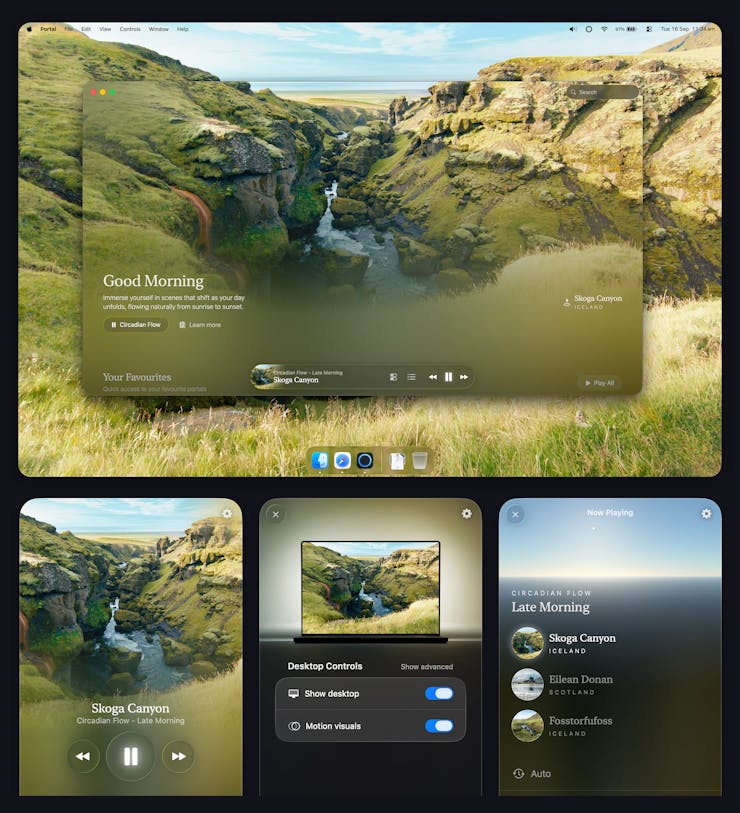
At Portal, we’ve been on this biophilic journey for some time and becoming much better at articulating it both inside and outside our products. If Apple’s approach hints towards this approach, then Portal makes no secret of it whatsoever. We’re all in on creating seamless, beautiful experiences designed to prioritse health and performance, and inspired by the magic of nature.
It’s a core reason why we’ve been so excited to support Liquid Glass and bring this into the design of our products, initially on Mac. As many of our customers have already put their finger on, it really is a match made in heaven.
We believe the design of digital experiences offers such a unique opportunity to make a difference. To impact at scale and reach deep into people’s everyday lives.
Given Apple’s direct reach into millions, if not billions, of people’s daily lives around the world, even an overnight update can make a profound difference.
And if that update is grounded in health, then extraordinary things really can happen.